Friday, May 15, 2026

What Is BM109?

Many people living with TMAU know how hard daily life can be.
The smell caused by the condition can affect friendships, work, school, relationships, and mental health. Some people feel isolated or hopeless because there are very few treatments available.

Now, there may finally be some hopeful news.

A biotechnology company called BioMe Inc. in Seoul, South Korea, has received approval from the U.S. Food and Drug Administration (FDA) to begin testing a new treatment called BM109 in real TMAU patients.

This is important because it means the treatment has moved beyond laboratory testing and is now entering human clinical trials.

BM109 is a new kind of treatment called a live biotherapeutic product (LBP).

That means it uses living helpful bacteria to improve health.

The bacteria used in BM109 is a naturally discovered bacteria called:

Paracoccus aminovorans

BioMe says these bacteria can:

  • Break down TMA

  • Break down TMAO

  • Help remove odor-causing chemicals from the body

The goal is simple:

Reduce the chemicals that cause the smell before they build up.

This is different from many current treatments that only try to manage symptoms.


The FDA has now allowed BM109 to move into Phase 1/2a clinical trials.

That means researchers will now test:

  • Safety

  • Side effects

  • Whether it actually helps TMAU patients

The studies will involve real people with TMAU, not healthy volunteers.

The trials will be led by researchers connected to:

  • Yale University

  • Mayo Clinic

These are respected medical institutions in the United States.

It is important to stay realistic.

BM109 is NOT approved yet.

The treatment is still being tested.

That means:

  • Nobody knows yet how well it will work

  • Nobody knows if it will work for everyone

  • It could still fail during trials

But this is still a very meaningful step because TMAU has received very little research attention for many years.

For many patients, simply seeing a treatment move into human trials brings hope.


BioMe says TMAO may also be connected to:

  • Heart disease

  • Stroke

  • Kidney disease

Because of this, the company hopes BM109 may someday help with those conditions too.

But right now, the main focus is TMAU.


BioMe is also working on another bacteria-based product called BM107A.

This product is being studied for:

  • IBS (irritable bowel syndrome)

  • Colon health

  • Constipation

  • Inflammation

  • Brain and cognitive health

It works differently from BM109 and focuses on producing a healthy substance called butyrate in the gut.


People with TMAU often feel ignored by the medical system.

Many have spent years searching for answers, support, and understanding.

While BM109 is still experimental, this news shows that researchers are finally taking TMAU more seriously.

For now, the best thing patients can do is stay informed, stay connected with support communities, and watch for future updates from clinical trials.

Hope may still be early - but it is real.

REFERENCES

You JS, Yoon CE, Kim JB, Alrahman MA, Jung HY, Yoon MY, Kim YB, Lee SG, Nam HS, Yoon SS. Microbiome-Targeted Reduction of Circulating Trimethylamine N-Oxide Mitigates Ischemic Stroke Risk. bioRxiv. 2026:2026-04.

Kim SH, Yoon MY, Yoon SS. TMAO and the gut microbiome: implications for the CVD-CKD-IBD axis. Annals of medicine. 2025 Dec 31;57(1):2522324.

https://biz.chosun.com/en/en-science/2026/05/11/6HY2VNJO55COHMPIAMHS3PSPYU/

Wednesday, April 15, 2026

Why Clean Clothes Still Smell

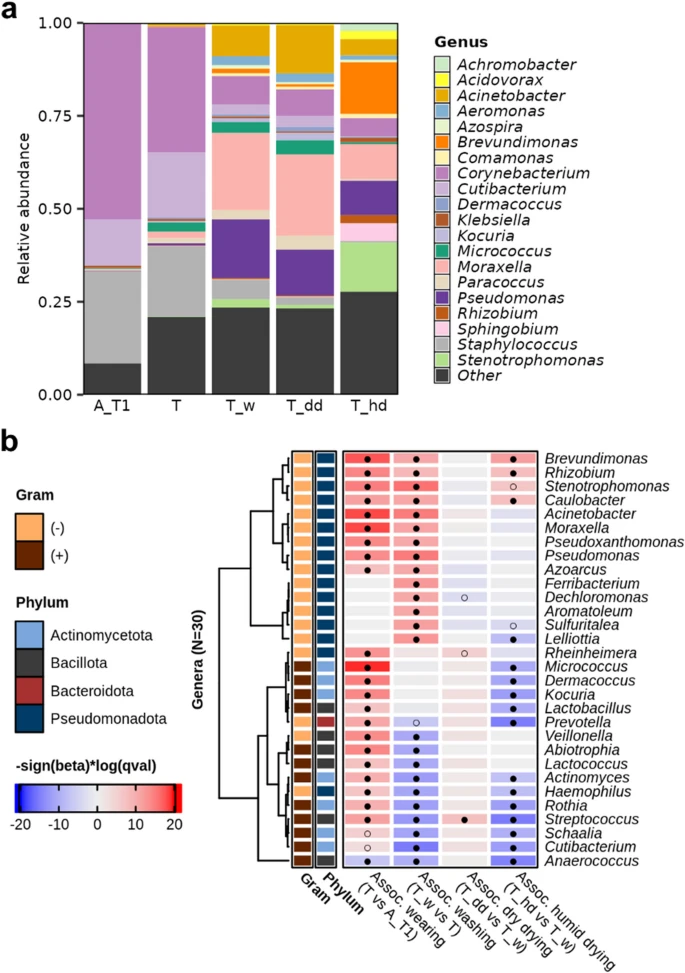
 A recent study in BMC Biology explored something many people quietly struggle with: why clothes can smell bad even after washing.

We know, it isn’t just sweat - it’s microbes.

  • Washing doesn’t fully remove bacteria—it can actually increase certain types of bacteria on clothes.
  • Your clothes pick up microbes not only from your body, but also from the washing machine and water.
  • Humid drying (slow drying in damp air) is a major problem—it allows bacteria to grow again and recreate bad smells.
  • Synthetic fabrics (like polyester) trap more odor-causing compounds than natural fabrics.

In simple terms:
๐Ÿ‘‰ You wash away odor… but bacteria come back - and if clothes stay damp, they multiply and produce smell again.


What helps

1. Dry clothes FAST

  • Don’t leave clothes sitting wet in the machine
  • Avoid indoor damp drying if possible
  • Use:
    • sunlight ☀️ (UV kills bacteria)
    • a dryer
    • or strong airflow

๐Ÿ‘‰ The study shows humid drying = more bacteria + worse smell


2. Use the right washing settings

  • Wash at higher temperatures (≥60°C when possible)
  • Use oxygen bleach or antibacterial detergents occasionally

๐Ÿ‘‰ Low-temp eco washes often leave bacteria behind


3. Choose better fabrics

  • Prefer:
    • cotton
    • wool
  • Be careful with:
    • polyester / gym wear (holds smell more)

4. Clean your washing machine

  • Run hot empty cycles regularly
  • Clean rubber seals
  • Leave the door open after use

๐Ÿ‘‰ Machines themselves are a source of odor bacteria


5. Use targeted products (if needed)

  • Enzyme detergents (break down sweat compounds)
  • Oxygen bleach (kills microbes)
  • Laundry sanitizers

๐Ÿ‘‰ Not always necessary—but helpful for persistent “permastink”


6. Don’t overload or delay laundry

  • Overloading reduces cleaning effectiveness
  • Letting clothes sit damp = bacteria growth

Going Deeper: What Actually Causes the Smell?

๐Ÿฆ  “Smelliest” bacteria aren’t just one group

The study shows that odor isn’t caused by a single species—it’s a community effect:

  • Skin-associated Gram-positive bacteria
    • e.g. Corynebacterium, Staphylococcus, Micrococcus (as also found in Gabashvili, 2020)
    • Key role: break down sweat into short-chain fatty acids (classic BO smell)
  • Environment-associated Gram-negative bacteria (after washing)
    • e.g. Pseudomonas, Acinetobacter, Moraxella
    • Key role: thrive in moist conditions and contribute to “musty” or “wet laundry” odours

๐Ÿ‘‰ Washing often replaces skin bacteria with environmental ones, rather than removing microbes entirely


๐Ÿงช The real culprits: volatile molecules (not just bacteria)

What we smell are volatile organic compounds (VOCs), especially:

  • 2- & 3-methylbutanoic acid → cheesy / sweaty
  • n-pentanoic, hexanoic acids → rancid / sour
  • aldehydes (like octanal) → fatty / “post-wash” smell

These molecules:

  • disappear after washing
  • reappear during humid drying due to bacterial metabolism

๐Ÿง  Why single-method science falls short

❌ Sequencing alone is not enough

Metagenomics tells you:

  • who is there

But not:

  • what they are actively doing
  • which ones are producing odours

๐Ÿ‘‰ The paper shows huge taxonomic shifts (who’s present changes a lot)


❌ Metabolites alone are not enough

Chemical analysis (VOCs) tells you:

  • what smells are present

But not:

  • which microbes produced them
  • how environmental conditions shaped them

๐Ÿ”— The key insight: function ≠ identity

One of the most interesting findings:

  • Microbial composition changes a lot
  • Functional pathways stay relatively stable

๐Ÿ‘‰ Different bacteria can produce the same smelly compounds

This is called functional redundancy.


๐Ÿงฌ Why multi-omics is essential

To truly understand laundry malodour, you need:

1. Metagenomics

  • Identify microbial community
  • Track shifts (skin → machine microbes)

2. Metabolomics / GC-MS

  • Identify actual odour-causing compounds

3. Quantitative methods (e.g. flow cytometry)

  • Measure bacterial load changes

4. Environmental context

  • Temperature
  • Humidity
  • Fabric type

๐Ÿ’ก Research implications

  • Designing detergents should target functions (metabolism, biofilms), not just species
  • Drying conditions may be as important as washing chemistry
  • Future work:
    • transcriptomics (gene activity)
    • real-time VOC tracking
    • biofilm disruption strategies
REFERENCES

Dรญez Lรณpez, C., Van Herreweghen, F., De Pessemier, B. et al. Unravelling the hidden side of laundry: malodour, microbiome and pathogenome. BMC Biol 23, 40 (2025). https://doi.org/10.1186/s12915-025-02147-5

Gabashvili IS Cutaneous Bacteria in the Gut Microbiome as Biomarkers of Systemic Malodor and People Are Allergic to Me (PATM) Conditions: Insights From a Virtually Conducted Clinical Trial JMIR Dermatol 2020;3(1):e10508  doi: 10.2196/10508

Monday, January 5, 2026

Research Over Despair

I am always glad to receive letters from people who, despite facing real difficulties, are motivated to understand their condition and actively look for solutions. This letter was one of those.

It came from a young person who had lived with PATM (People Allergic to Me) for just over a year. In that short time, the condition had disrupted education, lab work, friendships, and mental health. Like many others with PATM, this individual had been told - explicitly or implicitly - that what they were experiencing might not be real.

What struck me most was not the suffering (which, sadly, is familiar), but the decision that followed: instead of giving up, they chose to learn, to research, and to ask whether science might eventually provide answers - not only for themselves, but for others.

Below is a modified, bulletized and anonymized version of my response to their questions, shared here because many patients ask the same things.


Why is PATM still an undiagnosed condition?

PATM is often described as “undiagnosed,” but a more accurate term would be not formally recognized.

For a condition to become a recognized clinical entity, several things usually need to be in place:

  • a consistent case definition

  • reproducible, objective measurements

  • and a plausible pathophysiological mechanism that can be validated by multiple independent groups

At present, PATM does not yet meet all of these thresholds.

One major challenge is heterogeneity. The presentation varies widely from person to person, and triggers differ depending on environment, exposure, and individual biology. Another major obstacle is that current clinical workflows are poorly suited to capture intermittent, airborne chemical events. Many patients describe symptoms that occur in bursts—so a clinical visit may appear “normal,” even when the lived experience is not.


What would it take to achieve a formal medical diagnosis?

Large clinical trials can help, but they are rarely the starting point.

The real bottlenecks are:

  • reproducible measurement methods

  • defining subtypes rather than assuming a single mechanism

  • capturing the episodic (“bursty”) nature of emissions

A well-designed, multicenter observational study—with standardized sampling protocols and careful timing relative to symptoms—may be a more realistic bridge step than jumping directly to intervention trials.

An official diagnosis could be beneficial. It can legitimize patients’ experiences in clinical settings, redirect care away from reflexive psychologization and attract more serious research attention. But such a diagnosis has to be built on solid evidence to endure.


Is toluene the main irritation-causing substance?

It is unlikely that there is a single universal compound responsible for PATM.

Research on skin gas emission profiles is important because it demonstrates measurable chemical differences, but the broader picture likely involves multiple emitted mixtures and multiple subtypes. In some individuals, compounds such as toluene or related aromatics may contribute to irritation-like symptoms; in others, different chemical patterns may dominate.

Another key factor may be differences in detoxification or clearance. Some people appear more susceptible to everyday exposures—such as secondhand smoke, solvents, or indoor VOCs—not because exposure is higher, but because metabolism and elimination differ.


What can patients realistically try on their own?

I generally recommend starting with low-risk, high-information approaches:

Structured symptom and exposure logging

Tracking timing, diet, stress, environment (workplace, vehicles, indoor air), laundry and personal care products, and proximity to smoke or solvents can help identify repeatable patterns.

Basic medical rule-outs

Even when PATM is the primary concern, it is important to evaluate common contributors to odor or irritation-related conditions, such as reflux, sinus disease, metabolic or endocrine issues, liver and kidney function, medication effects, and dermatologic conditions.

Environmental controls

VOC-related problems are often exposure-amplified. Fragrance-free products, avoiding solvent-heavy cleaners, improving ventilation, and using HEPA plus activated carbon filtration can reduce background “noise” and make patterns easier to recognize.

I generally advise caution with high-risk or expensive interventions unless there is a clear rationale for a particular subtype.


What about fecal microbiota transplants (FMT)?

FMT is scientifically interesting but should be approached with caution. It is not a general solution for PATM and carries nontrivial risks. If considered at all, it should be under appropriate medical supervision and based on a specific, individualized hypothesis—not as a last-resort experiment.


Are microbiome or skin-gas profiling tests useful?

They can be, if used carefully.

  • Gut microbiome profiling may provide clues, but interpretation is still limited and should always be paired with symptom timelines, diet, and repeat measurements.

  • Skin or exhaled gas profiling is conceptually promising because it targets the suspected output directly. However, episodic emissions make timing critical, and passive sampling methods may miss short-lived events.

The usefulness depends less on the technology itself and more on study design.


Would wearable or portable gas sensors help?

In principle, yes. Continuous or frequent measurement could finally correlate chemical signatures with symptoms and environmental context.

In practice, true GC–MS–grade performance in a wearable format remains extremely challenging. Field measurements are complicated by changing ambient air, and episodic emissions require high time resolution and careful baseline correction. The idea is sound; the technology is still catching up.


Could funding agencies support this kind of work?

Possibly more so now than in the past.

Historically, conditions that primarily affect quality of life rather than mortality have struggled to gain funding. When I first applied for support nearly two decades ago, the problem was explicitly described as “not important enough.”

Today, there is broader recognition of the impact of stigma, mental health, and chronic quality-of-life impairment. Advances in exposomics, microbiome science, and wearable sensing technologies make it easier to frame this work as high-risk, high-reward, particularly if the focus is on measurement platforms, subtyping, and mechanism rather than a single compound.


Much of this may sound like a list of obstacles. But compared with even a decade ago, the path forward is clearer.

If PATM turns out not to be one condition but a family of related ones, that is not a failure of science—it is a more accurate description of biology. Progress will likely come not from searching for a single universal cause, but from building frameworks that can accommodate diversity, intermittency, and complexity.

And sometimes, progress begins with a patient who decides that understanding is better than silence.