Thursday, August 29, 2019

Reducing the stigma of odor disorders

Some conditions - such as obesity, depression and functional odor disorders - come with a social stigma. Understanding the etiology of these conditions helps to avoid stereotypes and find remedies. 

Metabolomics analysis of morning urine samples helped to evaluate the heterogeneity of MEBO population as good as challenge tests, procedures used to induce symptoms and assess resilience to perturbations caused by sugars. 


...  Read more ... 

Monday, August 19, 2019

The elusive balance: Epulopiscium

Originally published on Aurametrix site


Diseases and conditions caused by microorganisms could be difficult to diagnose. Even in such seemingly simple case as avian flu there could be many different infectious agents causing it, so  new molecular diagnostic techniques are constantly developed and refined. 
We don't have all our test results yet, but have already started analyzing available data. Regression analyses of 153 gut microbiome samples show that MEBO score (a composite score derived from answers to questions pertaining to odor or PATM symptoms) can be explained by combined levels of several dozen microorganisms. Some of them make symptoms worse, while others neutralize the odors or PATM aura.

Here is one example: Epulopiscium
Discovered in the gut of the brown surgeonfish, Epulopiscium actually means “guest at a banquet of fish.” It's a large bacteria  - the size of a hyphen in a printed text, visible to the naked eye. 

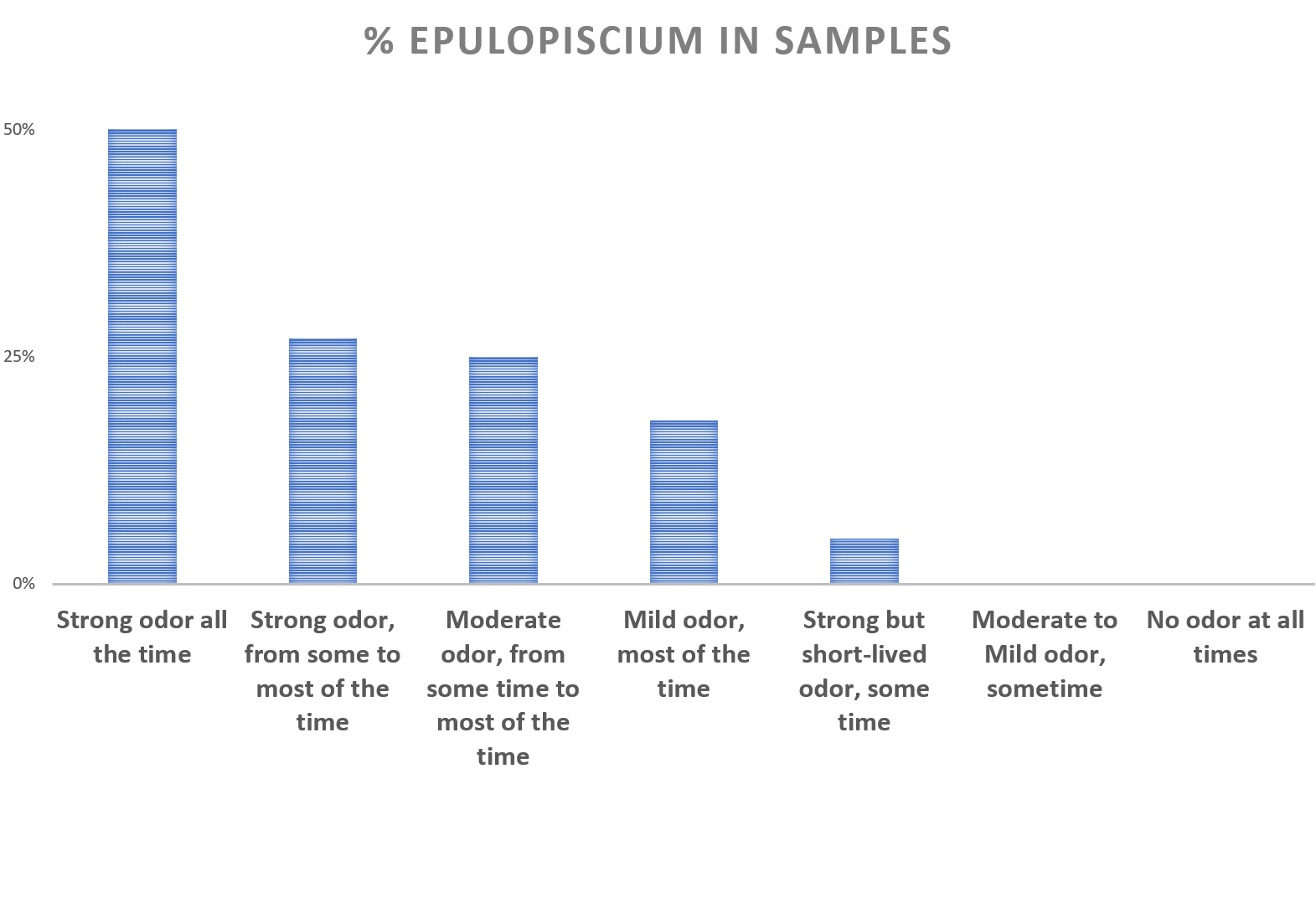
Epulopiscium was found in only 5% of general population that tested with uBiome. But we see a much higher percentage of samples with these bacteria in our dataset, depending on the symptoms reported.  

It could be detected in 50% of the sufferers experiencing the worst symptoms, decreasing as symptoms lessen.  The prevalence of this bacteria in sufferers with strong but rarely manifested symptoms  is about the same as in general population, but we never observed these bacteria in those with mild occasional symptoms or no symptoms at all.

Of course, this is not the only responsible microorganism for odors or PATM. We will be reporting more, along with what seem to help in reducing the levels.

We will also tell about bacteria "neutralizing" the odors, found in remission. Some of them are antiinflammatory, others help with digestion. Interestingly, a number of butyric acid-producing microbes also seem to help, even though butyric acid is not supposed to smell pleasant. We'll talk about it next time.

Wednesday, August 14, 2019

Friends and Stars


reproduced from Aurametrix blog

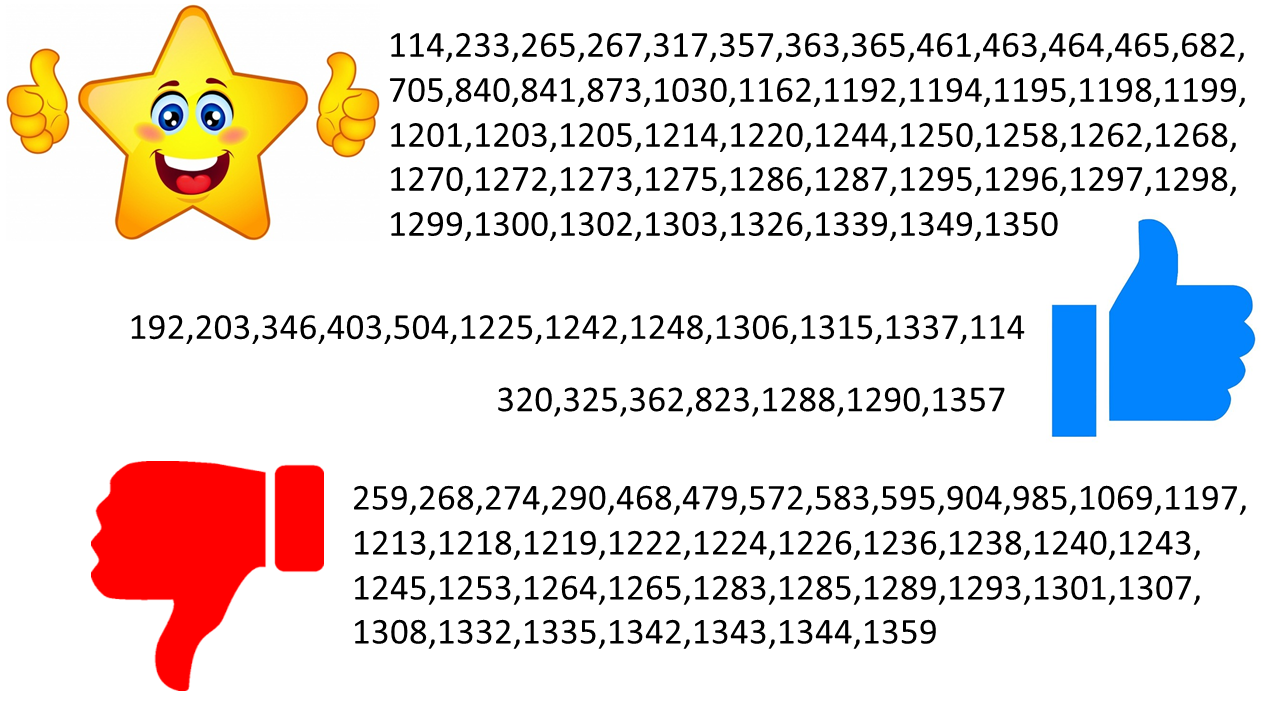
Over hundred people agreed to participate in our study. Half of them went through all the steps and let us see results of all their test kits (last digits of their IDs are listed next to the image of a star with thumbs up). Over a dozen submitted questionnaire with one or two samples - which was also very helpful. And almost half did not do anything (listed next to the red thumbs down sign). We understand that unforeseeable things happen, and  commitments may be difficult to fulfill. Still, it is worth to look if there is anything in common among those who did not submit samples and QoL questionnaires. Were those mostly our "new friends"? 

The answer is kind of, but it's not that simple.                                                                    
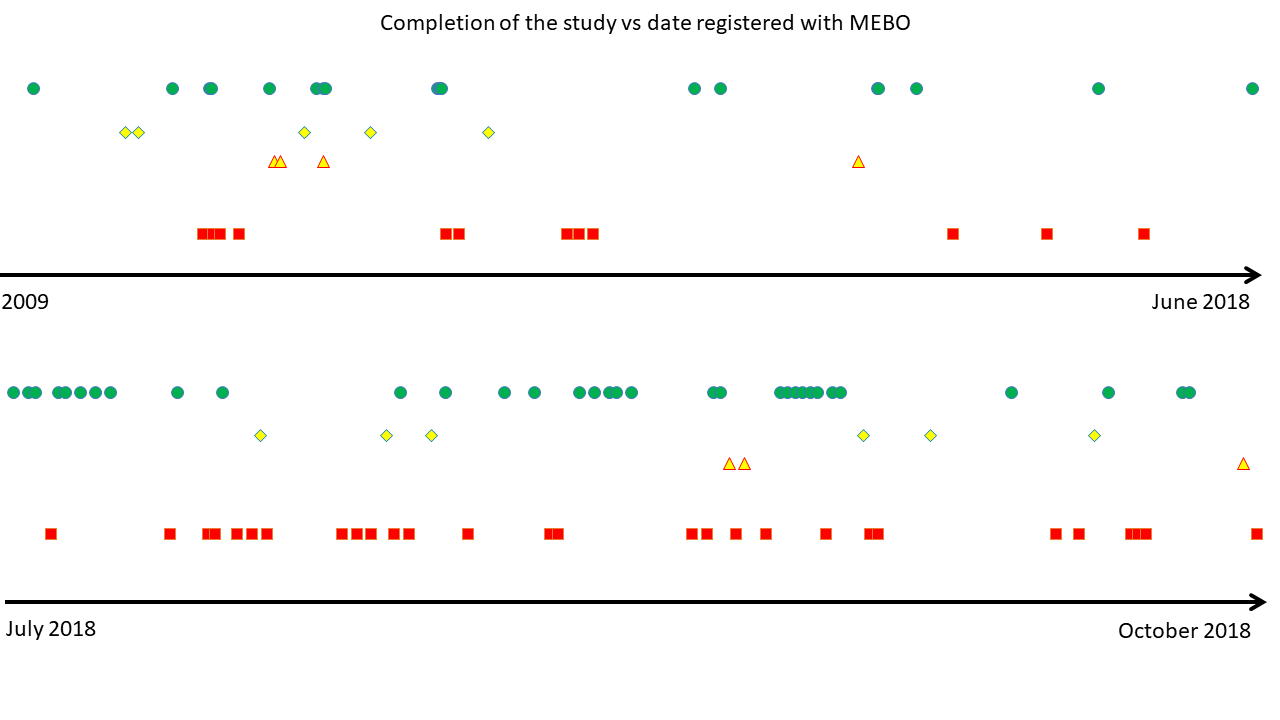
The figure shows when participants of our trial were registered with MEBO - before or after the first stages of our uBiome study. Percentage of those who did not return any samples was 30% for those who participated in prior MEBO activities vs 40% for newly signed individuals. (The ratio of our Study "Stars" vs those who did not return the kits to those who returned all kits and answered associated QoL questions was 60% for "old friends" vs 80% for "new friends"). Yet, the figure shows that "stars" (green circles) and "no-shows" (red squares) tend to "cluster", and possibly associate together.  Perhaps associations are indicators of the values we value? Show me your true friends and I'll tell you who you are?